
OfS data highlights a possible return to growth

Image courtesy of Flickr
With data from HESA continuing to be released with a significant time delay, trends gleaned from the Office for Students (OfS) can provide valuable context.
There are some important distinctions between the two, with the OfS reporting what they classify as early estimates. With the OfS providing funding to registered providers, they are required to submit these figures to the OfS. However, while the exact figures will differ from what is eventually reported by HESA, the two have historically been highly correlated, and therefore the data can provide an indication of the 2025 demand trends ahead of the HESA release in 12 months' time.
The downside is that the data only covers England, and without industry standardisation, their categories do differ. Additionally, in the 2025 data, the OfS has decided to omit postgraduate research students, so it’s no longer possible to produce a like-for-like comparison over an extended time. In 2024, these research students equated to ~19% of all postgraduates.
However, let's now consider what the recently released data indicates for the 2025 intake, based on the available data, excluding research postgraduate students.
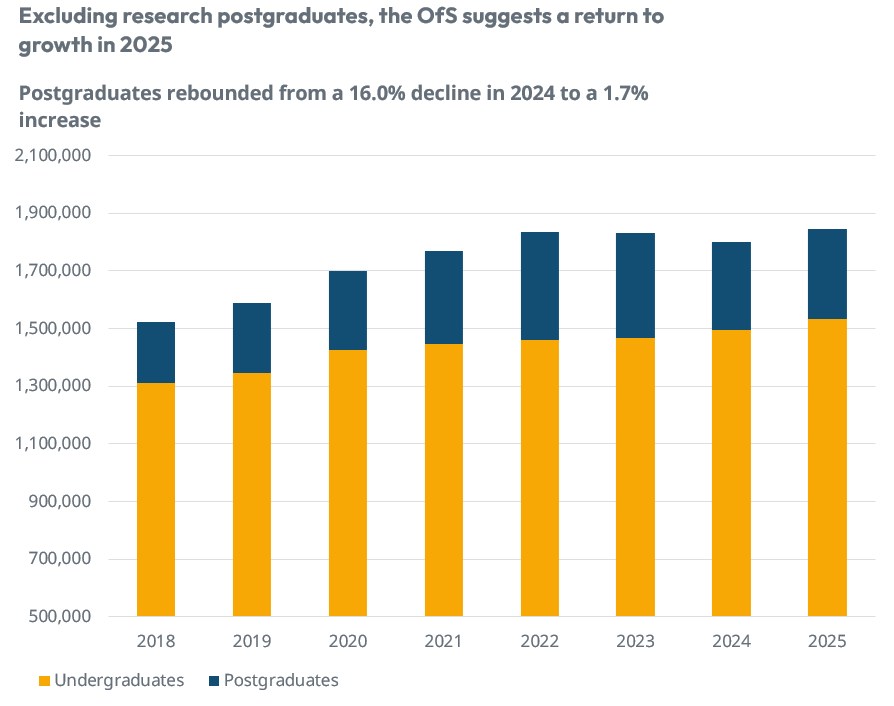
Starting with the data at an aggregated level, once postgraduate research students are excluded, the figures point to a more positive trend than in recent years. In 2024, the total number of students declined by 1.7% due to a 16.0% fall in postgraduates (undergraduates: +2.5%). However, in 2025, this trend was reversed. A return to growth in postgraduates of 1.7% contributed to a jump in total student numbers of 2.4% year-on-year.
While postgraduate numbers remain 16.8% lower than reported in 2022, the rebound will be well received after what has been a volatile few years.
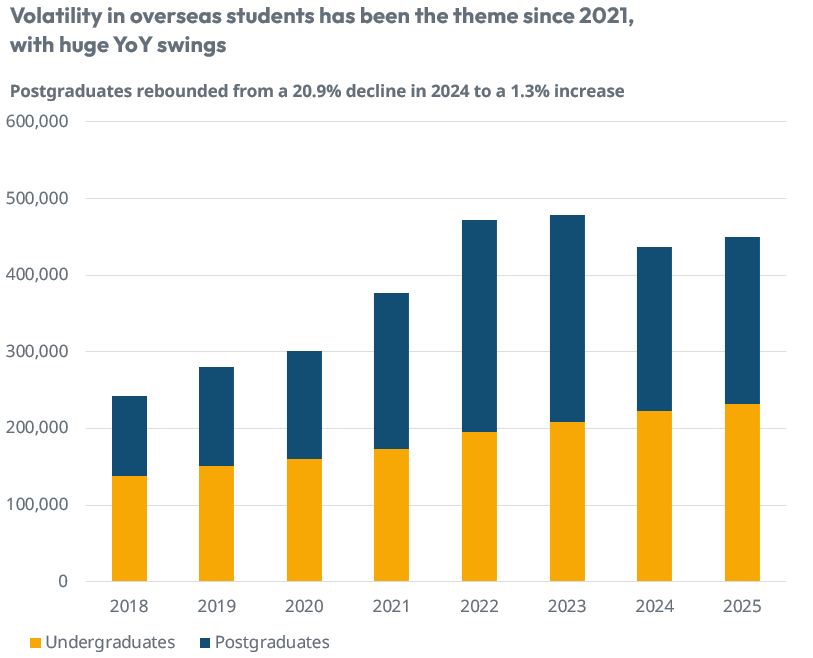
Overseas students remain a key demographic for PBSA, and the most recent data follows the broader national trend. A return to growth in overseas postgraduate students (+1.3%), combined with an increase of 4.6% in undergraduates, equated to a total jump year-on-year of 3.0%. This more recent growth follows an 8.8% decline reported in 2024 due to a significant (20.9%) reduction in postgraduates in the same year.
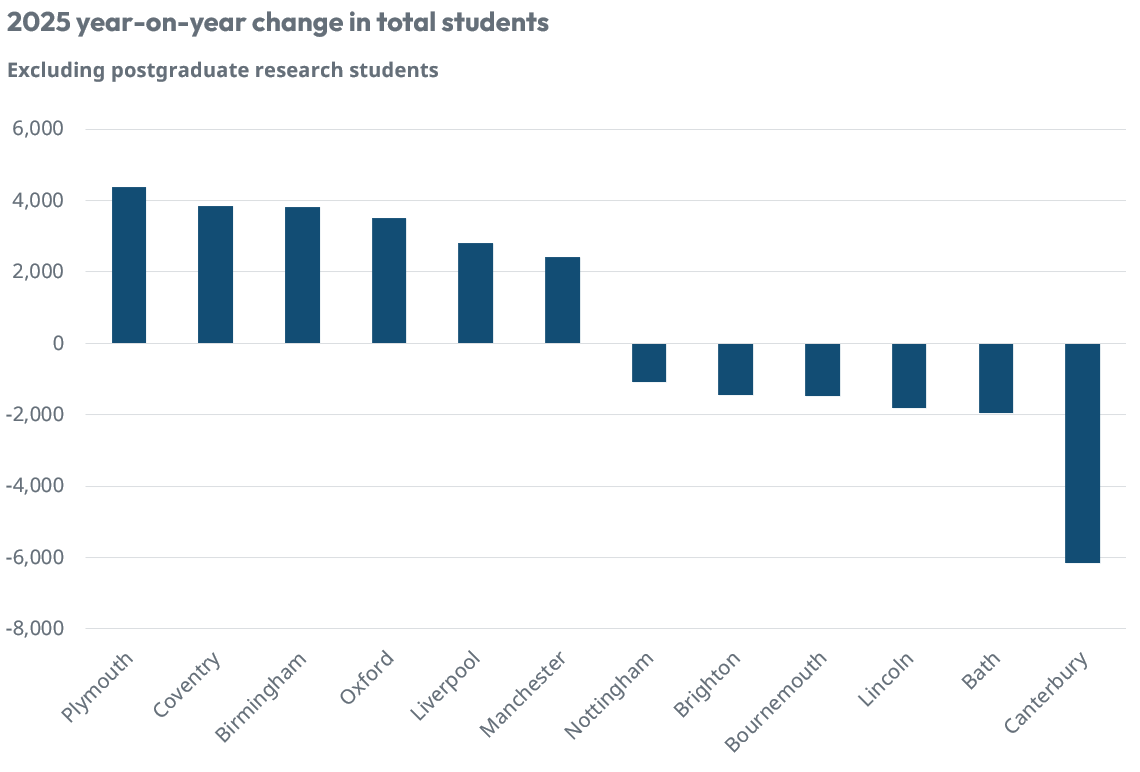
Isolating the data at a locational level, changes in total student numbers vary significantly. Plymouth, Coventry, and Birmingham all reported notable increases in 2025, while Canterbury saw a fall of more than 6,000.
We can also consider how numbers have changed over a longer time period. In 2025, Birmingham’s student numbers were almost 18k higher than in 2018, with the city managing to sustain growth over a prolonged period. Others such as Manchester and Bristol, while reporting declines more recently, remain up over the long term. Nottingham, similarly, has reported significant volatility in recruitment. Between 2018 and 2022, numbers grew by 12.8k. However, in the following years and up to 2025, numbers then dropped by more than 9k. These huge swings have made certain markets much more difficult to predict and, as a result, have impacted leasing velocity and rents in certain circumstances.
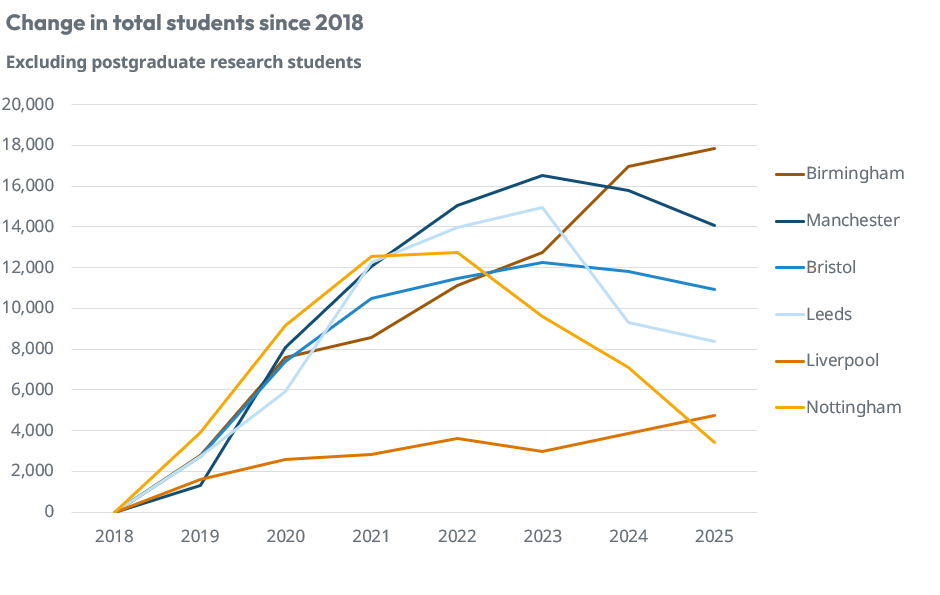
At the other end of the spectrum, locations such as Huddersfield have reported a steady decline since 2018, with numbers now down by 6.5k. While numbers at Coventry rebounded in 2025, they also still remain down compared to levels reported in 2018.
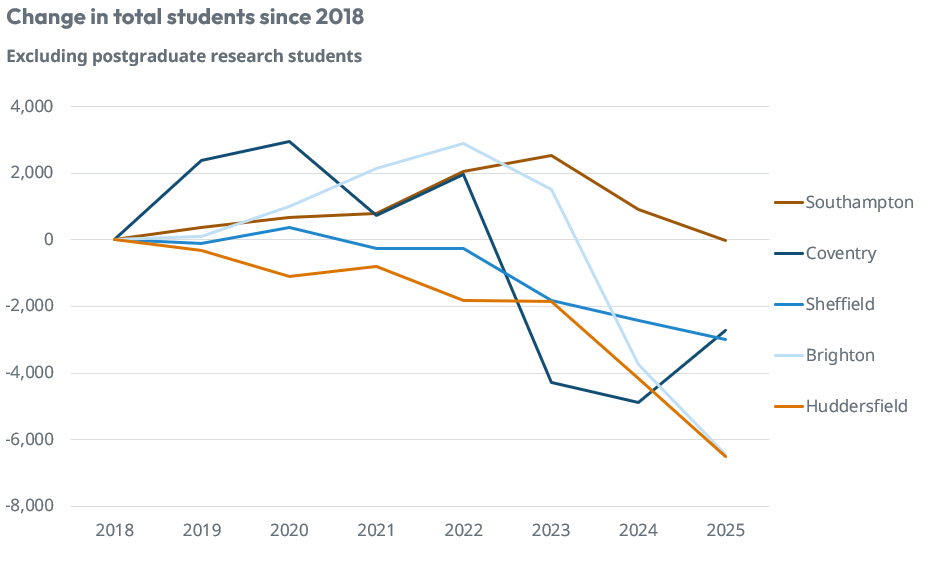
Running the same analysis but this time focusing on overseas postgraduate taught students, volatility has again been a key theme in some cities. Nottingham, as we have just reported, also saw substantial swings in this category, while Brighton has now moved into negative territory.
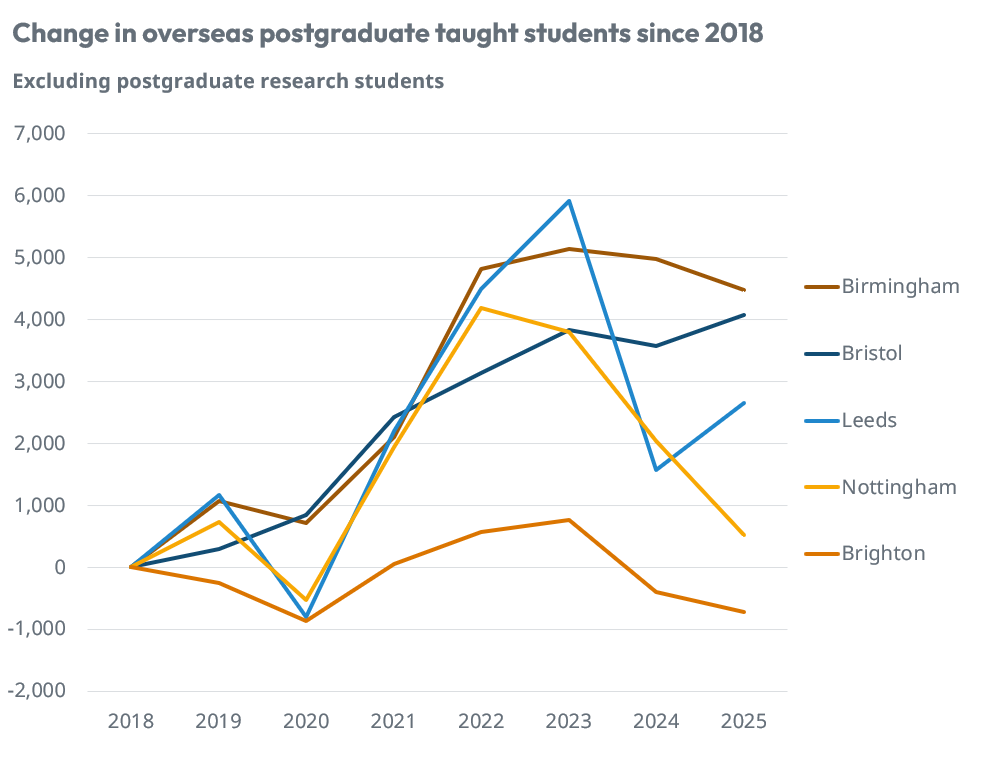
While not perfect, the latest OfS data does highlight the continued divergence in performance not only at a city level but also between institutions. With HESA reporting delays, these more recent insights can provide valuable context into market performance more recently, helping industry stakeholders navigate what has been a more challenging market environment.
For up-to-date data to support rent setting, underwriting, and broader industry benchmarking, the StuRents Data Portal provides users with instant access to sector-leading data.
Note: This data was first revealed during our Q1 Quarters’ webinar on February 26th, which included all postgraduates. With the recent change in reporting standards from the OfS, our most recent analysis provided above has excluded postgraduate research students from the time series.
Share

Article by
Head of Research at StuRents
Richard leads the StuRents research team, providing proprietary, platform-driven insights to help stakeholders make better-informed decisions about the market.
