
UCAS clearing 2026 – 1 day after results day

One day on from A-level results day, StuRents has examined the latest available undergraduate acceptance data from UCAS to highlight key trends and notable year-on-year changes. Bear in mind that these figures will continue to evolve, with a final dataset expected from UCAS 28 days after results day, on the 10th of September.
Source: UCAS
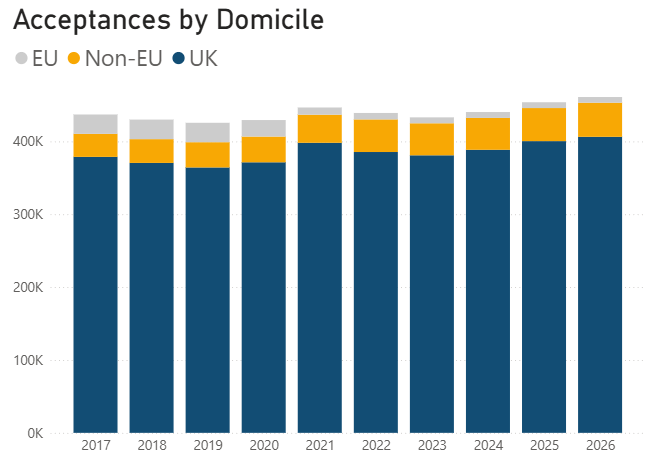
Total acceptances currently stand at 461,050, representing a 1.6 percentage point year-on-year (YoY) increase. This upward trend is supported by gains across both domestic and overseas applicants. UK-based acceptances have reached 406,430 (up 1.5 points YoY), while non-EU international acceptances experienced a slightly sharper proportional bump, climbing 3.1 points to reach 46,830.
Source: UCAS
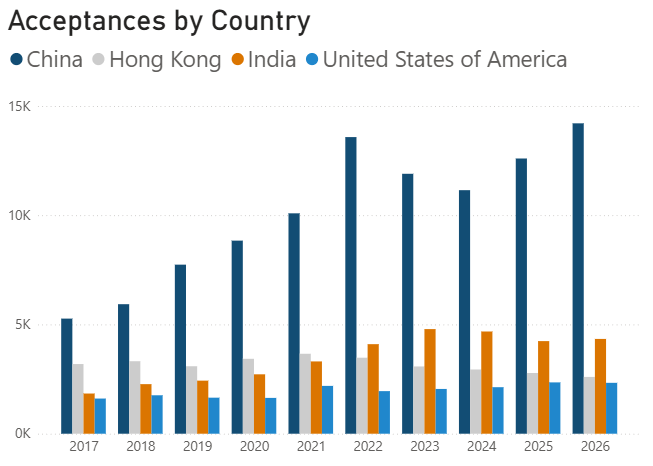
Looking specifically at key non-EU international markets, acceptance trends varied notably by region. Acceptances from China surged to 14,210, representing a strong 12.8 point YoY increase. Meanwhile, acceptances from India saw steady growth, reaching 4,340 (up 2.4 points YoY). In contrast, Hong Kong recorded 2,600 acceptances, marking a 6.5 point YoY decline over the same period.
Source: UCAS
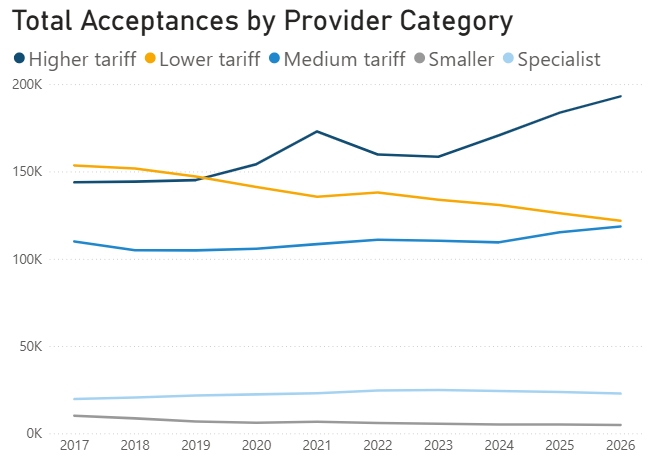
Looking at acceptances across university groupings, higher-tariff institutions continue to capture an increasing share of total placements. Higher tariff providers accounted for 41.9% of all acceptances, marking a 5.1 point YoY increase and extending a multi-year trend. Medium tariff providers also saw growth, rising 2.9 points YoY to make up 25.7% of total acceptances. In contrast, lower tariff providers saw acceptances decline by 3.5 points YoY, representing 26.4% of the total as part of an ongoing shift in student choices.
Source: UCAS
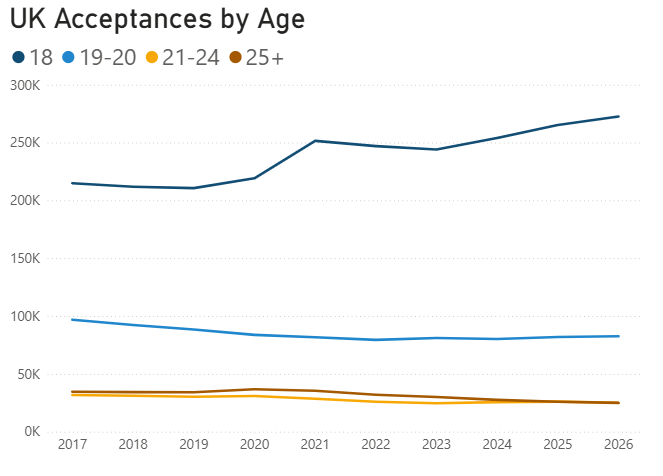
When broken down by age demographic, 18-year-old UK acceptances reached 272,650, marking a 2.8 point YoY increase and accounting for 67.1% of total UK acceptances. In contrast, acceptances across other age groups continue to stagnate or decrease, further cementing school-leavers as the primary driver of domestic placement volume.
Source: UCAS
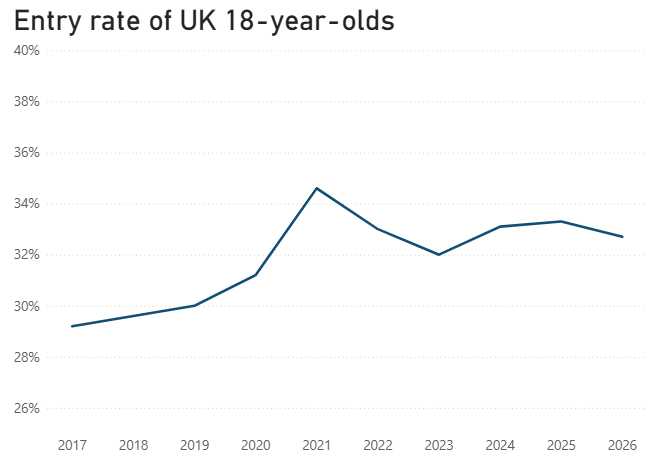
Despite the higher total volume of acceptances among school-leavers, the overall entry rate for UK 18-year-olds, representing the proportion of the population entering higher education, eased to 32.7%. This represents a 0.6 point YoY decrease, bringing an end to two consecutive years of growth in the participation rate for this age group.
Source: UCAS
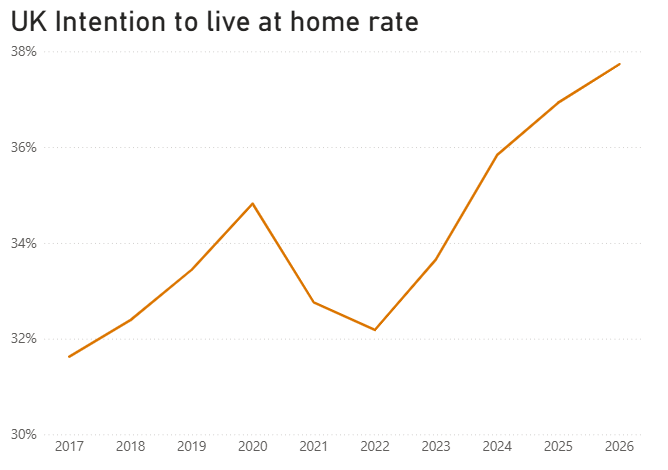
Looking at the proportion of domestic applicants indicating that they will live at home when they study, the UK intention-to-live-at-home rate now stands at 37.7%. This reflects a 0.8 point YoY increase, highlighting a broader and sustained shift in student behaviour, with the rate having grown by 5.5 points since 2022.
For more information about our proprietary, highly granular data covering UK student accommodation, contact the StuRents Research team today. Book a demo of our Data Portal to find out how you can have up-to-the-minute university housing insights at your fingertips, or get in touch with us about our Occupancy Survey.
Share

Article by
Research Analyst at StuRents
Sam Gillespie is a research analyst in StuRents’ research division, StuRents Intelligence.
