
StuRents Q3-2026 Webinar: Poll results

We recently hosted our Q3-2026 webinar, where we explored the latest student accommodation trends and insights and shared our outlook on what lies ahead for the industry. Here, we look at sector sentiment through attendee poll answers and compare them to the results of our Q2-2026 webinar - hosted in June.
If you missed the webinar, you can request access to the full recording here.
Sector sentiment and attendee poll
Note: The analysis is based on approximately 130 responses for each question.
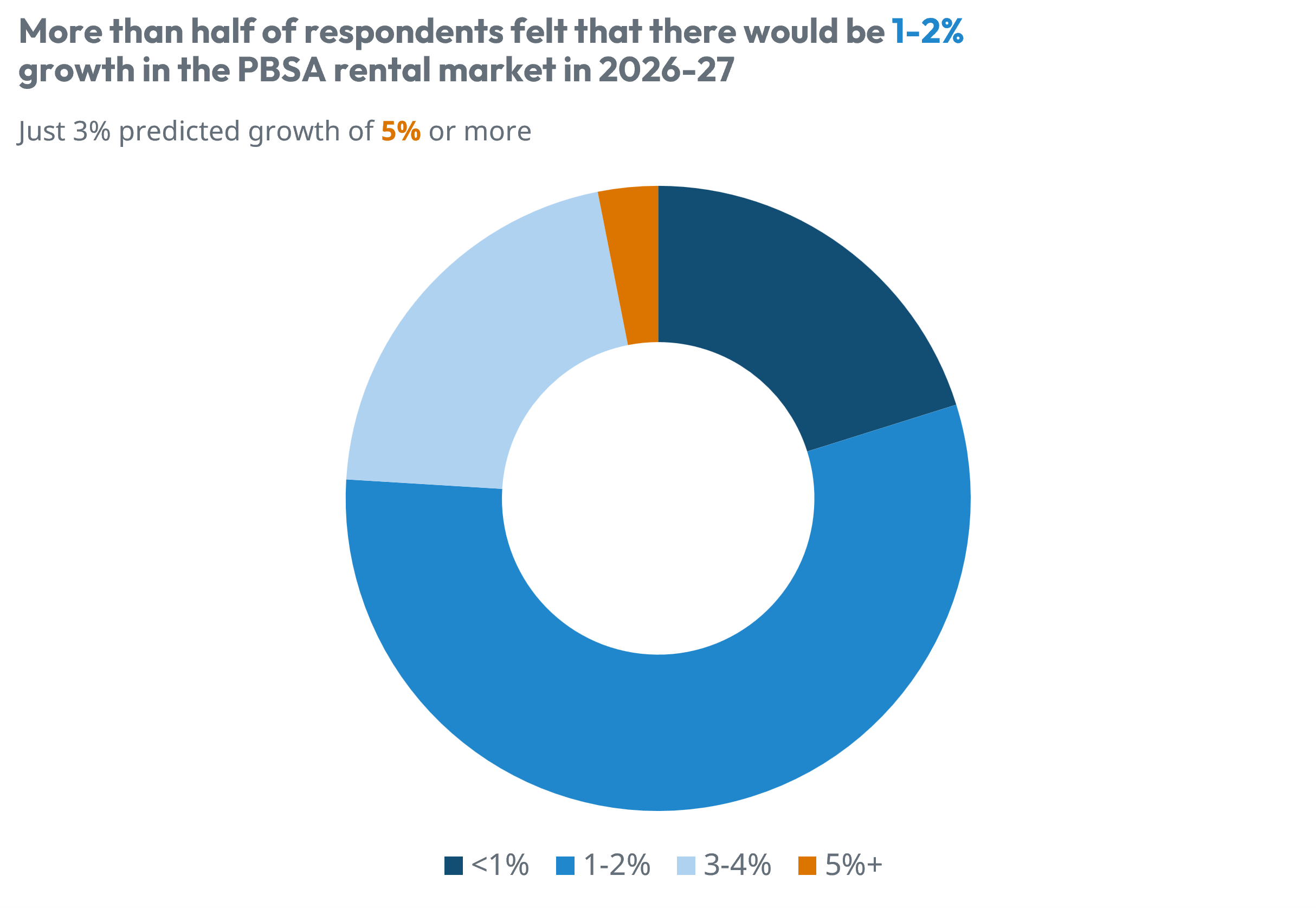
The first question for attendees was their current expectation for PBSA rental growth in the 2026-27 academic year. More than half (56%) of the respondents believed there would be 1-2% growth, with 20% taking a more reserved view at less than 1% growth. While around 21% of people were anticipating growth of 3-4%, just 3% of the respondents had expectations of 5% or above. While there is some optimism in the responses, the general outlook is more conservative – reflective of wider trends we’re seeing nationally.
These results are similar to those from the Q2 webinar, where 53% of respondents believed there would be 1-2% growth, 24% expected less than 1%, 23% expected 3-4% and none expected 5% or more.
Source: StuRents Q3-2026 Webinar
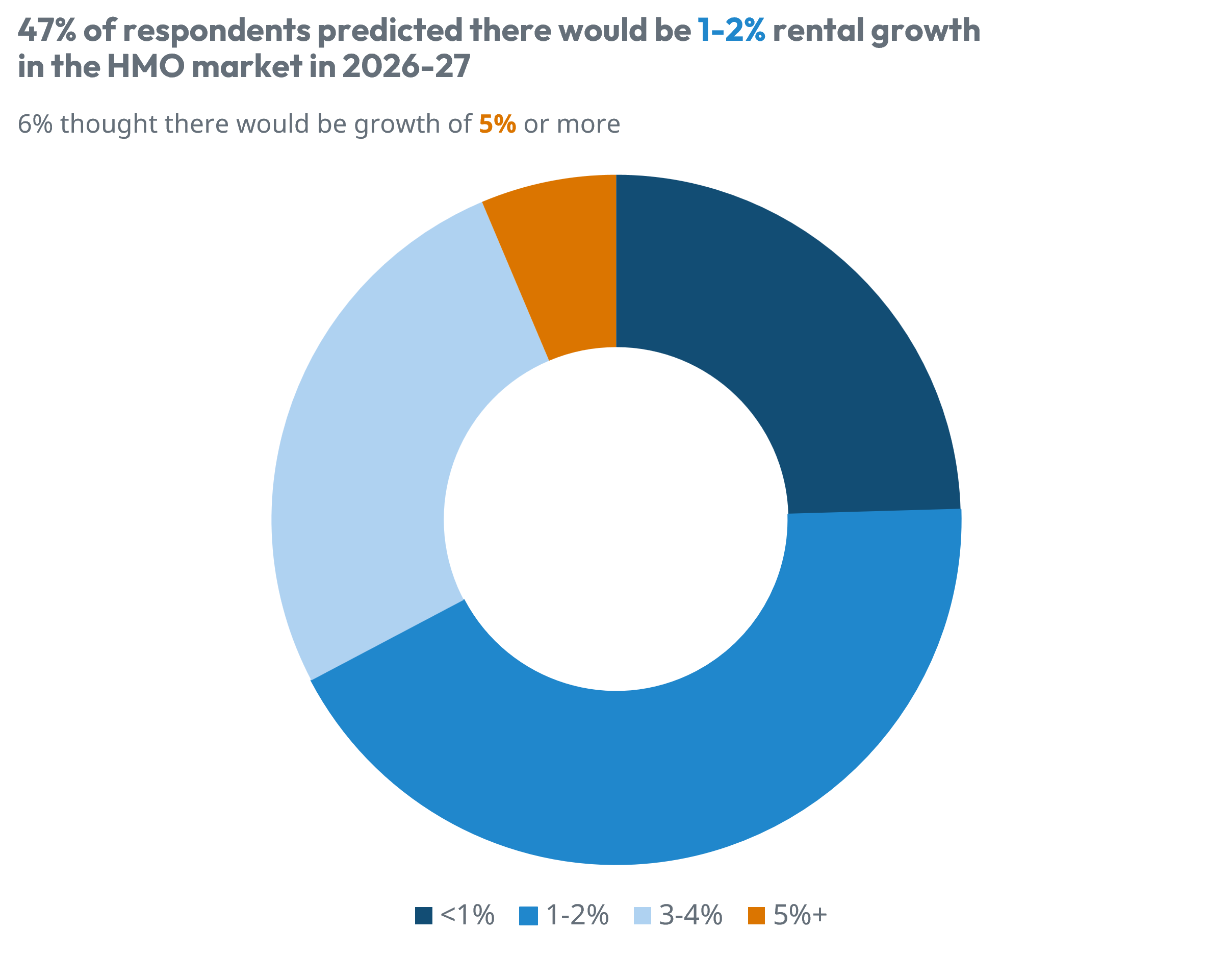
Moving to the topic of HMO rental growth, we asked attendees about their expectations for 2026-27. Less than 1% growth received 25% of votes, with 43% of attendees expecting growth of 1-2%. 26% believe there will be 3-4% growth, while just 6% think the figure will be 5% or more.
These answers are broadly in line with that of the previous webinar, where 22% of respondents believed there would be less than 1% growth, 40% expected 1-2%, 33% expected 3-4% and 5% expected 5% or more.
Source: StuRents Q3-2026 Webinar
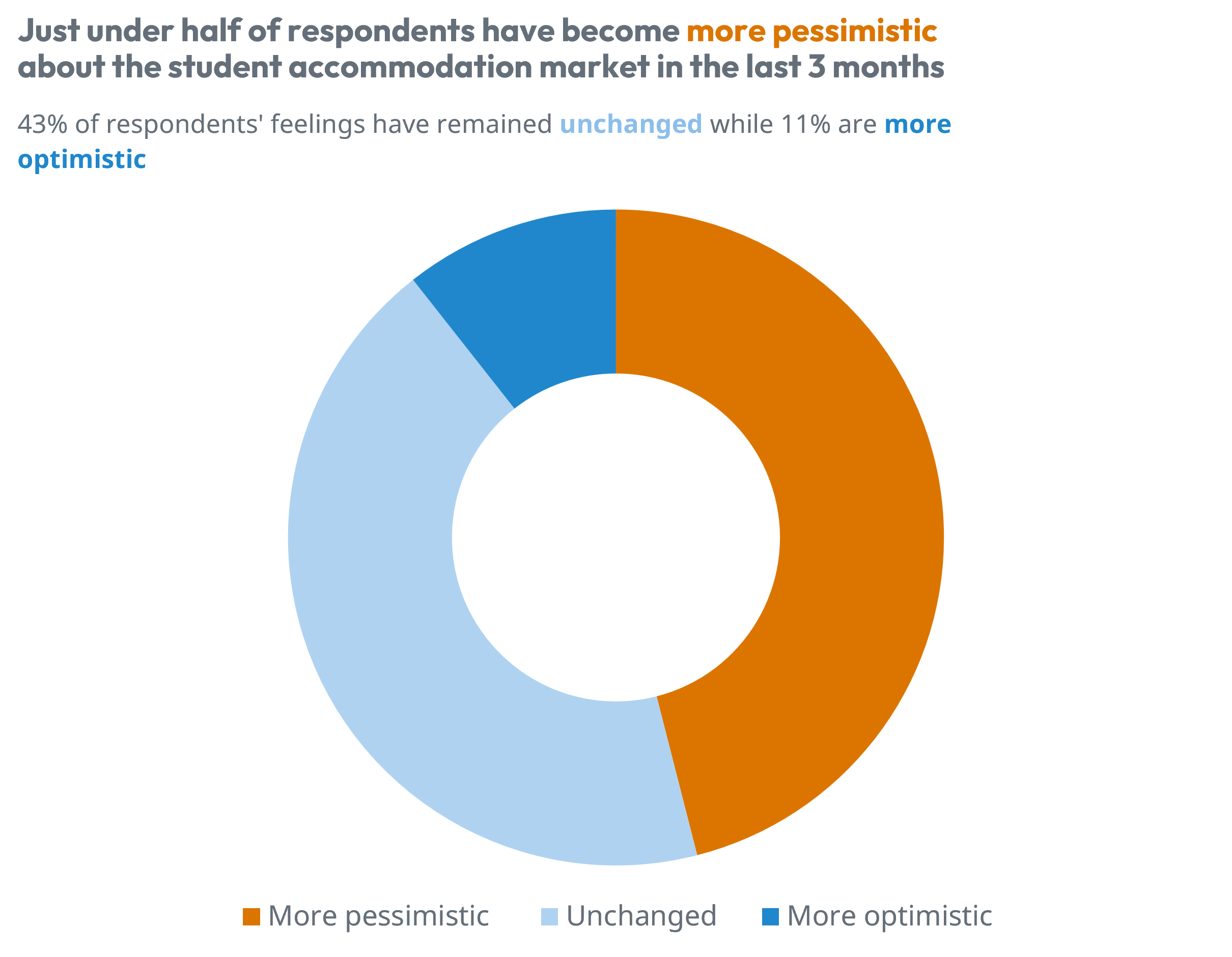
Finally, we asked webinar attendees how their view of the student accommodation market more generally has shifted in the last quarter. While 11% of respondents have become more optimistic, neutral or pessimistic responses make up the vast majority of votes, with just under half (46%) feeling negative about the market overall and 43% feeling unchanged.
These results are more neutral and slightly less negative than last quarter, where 54% were feeling more pessimistic and 28% were feeling unchanged.
Source: StuRents Q3-2026 Webinar
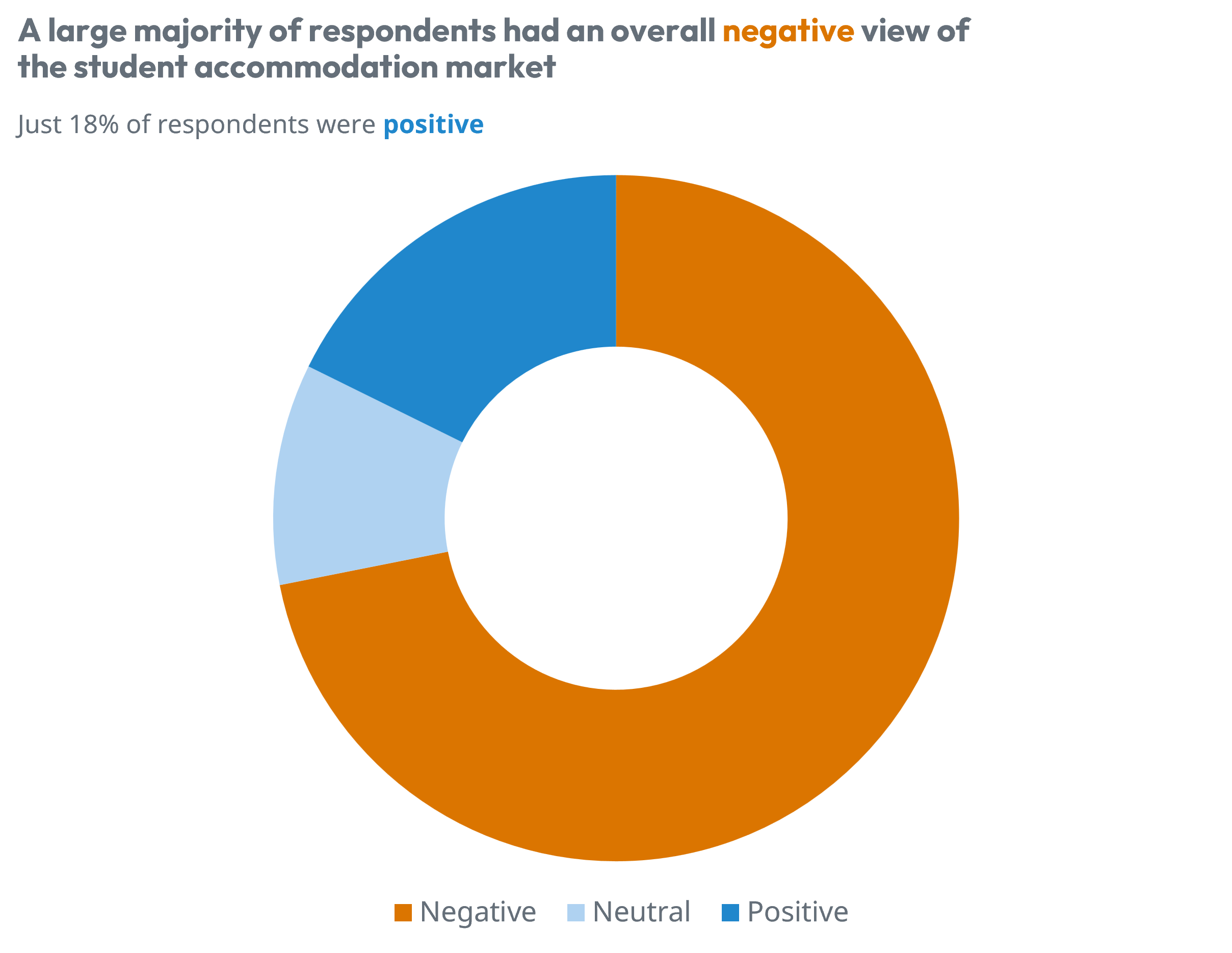
Combining responses into an aggregated view (by assigning numerical values to optimistic, neutral and pessimistic responses), there was a pessimistic sentiment to the student accommodation market overall, with 72% of respondents indicating negative or pessimistic sentiment across all three questions.
This is a slightly more negative result than in the last webinar, where 66% of respondents were feeling pessimistic overall. Also, the proportion of optimistic attendees has increased from 14% to 18% this quarter.
Source: StuRents Q3-2026 Webinar
While data indicates that planning activity and investment have been slowing, and many markets continue to lease slower compared to previous years, some markets are still facing a real shortage in student beds.
With clearing now underway, the latest UCAS data provides an early indication of how undergraduate demand is developing for the coming academic year. While overall acceptances remain positive, the picture beneath the headline continues to be mixed, with international growth increasingly concentrated among particular countries and higher-tariff institutions.
The right kind of data is critical in identifying these city or intra-city locations and capitalising on the opportunities early.
For more information about our proprietary, highly granular data covering UK student accommodation, contact the StuRents Research team today. Book a demo of our Data Portal to find out how you can have up-to-the-minute university housing insights at your fingertips, or get in touch with us about our Occupancy Survey.
Share

Article by
Research Analyst at StuRents
Sam Gillespie is a research analyst in StuRents’ research division, StuRents Intelligence.
