
Undergraduate vs postgraduate demand: A mixed picture for PBSA

Image courtesy of Flickr
Undergraduate vs postgraduate demand
The latest UCAS data points to continued growth in undergraduate demand, at least at a headline level. Figures released 28 days after results day show that total acceptances rose by 1.2% year-on-year, with both UK and non-EU numbers increasing. For accommodation providers, this offers some encouragement, although the underlying picture is more mixed.
Rising undergraduate acceptances
UK acceptances increased by 0.9% in 2026, equivalent to almost 4,000 students. While positive, this represents a marked slowdown from the previous year, when numbers increased by more than 10,000, or 2.4%. Non-EU acceptances followed a similar pattern, rising by 2,100 compared with almost 3,400 at the same point in 2025. Both groups therefore continue to grow, but at a slower pace.
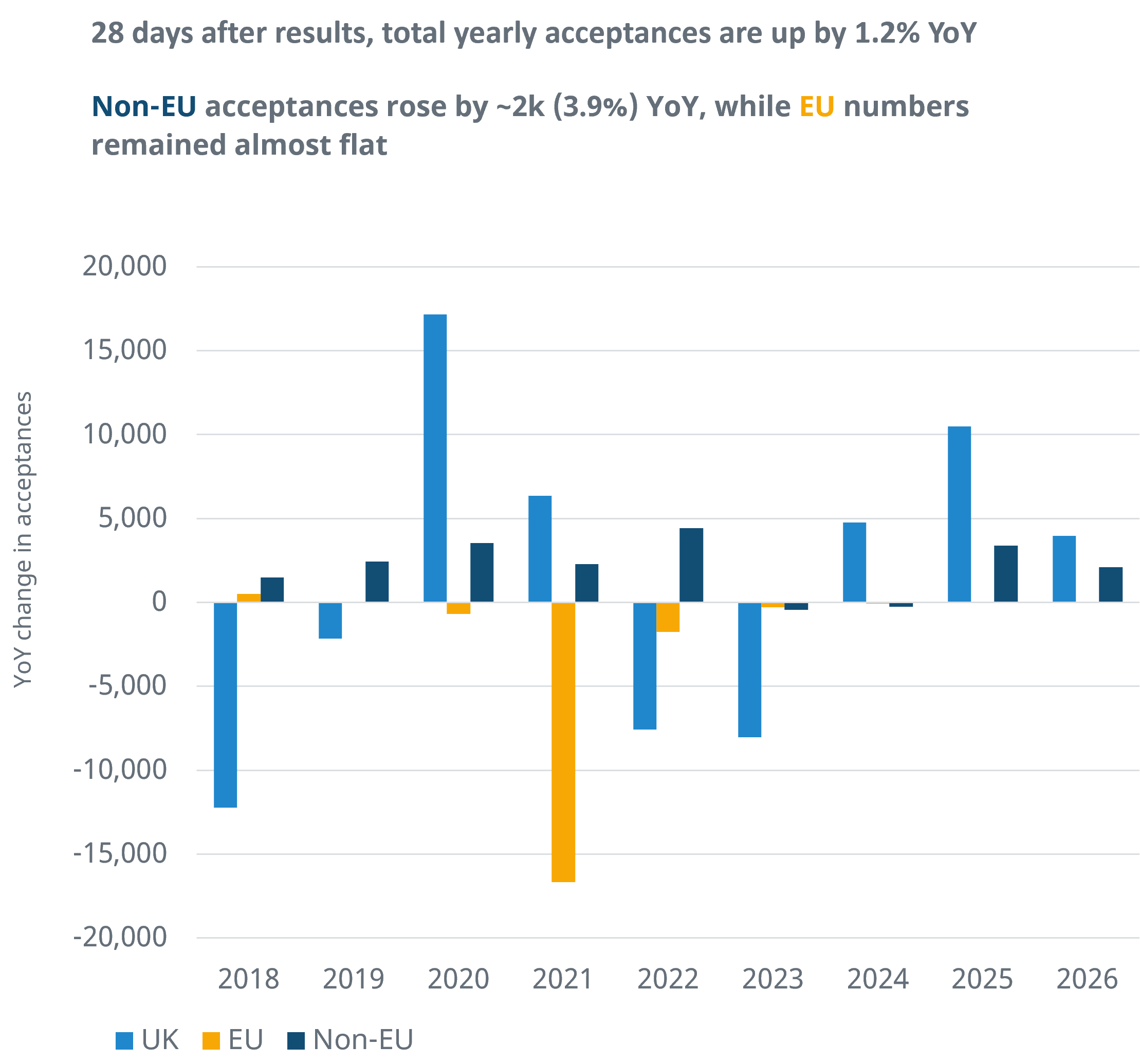
The headline figures also mask a decline in participation among UK school-leavers. Growth in UK 18-year-old acceptances reflects an increase in the size of this age group, rather than a higher proportion entering university. The UK 18-year-old entry rate fell to 35.4%, down from 36.1% in 2025.
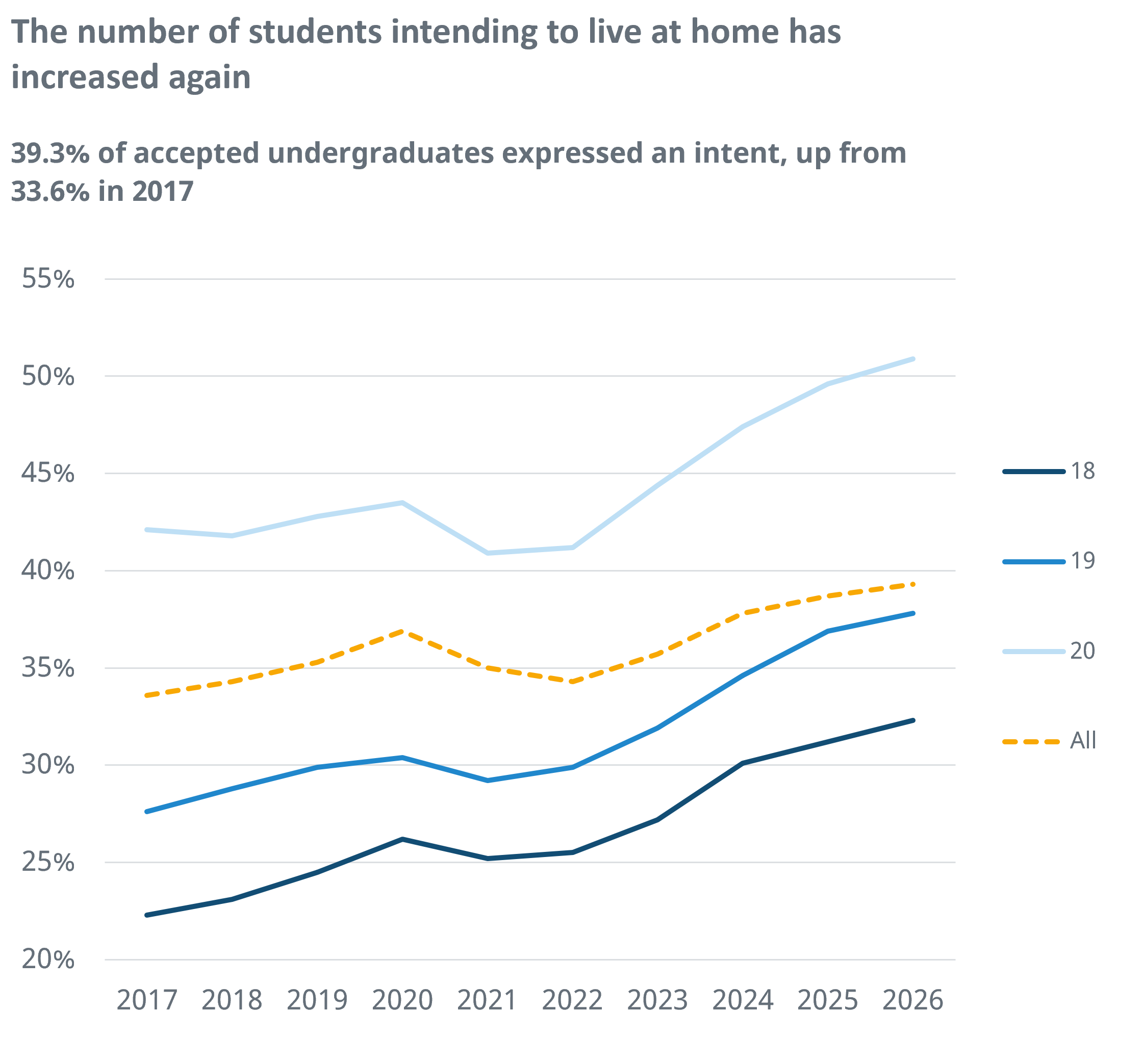
A further consideration for accommodation providers is the increasing proportion of students intending to live at home. UCAS records applicants’ intentions rather than their eventual living arrangements, but the trend suggests that a growing share of accepted students may not require term-time accommodation away from home.
The proportion expressing an intention to live at home reached 39.3% in 2026, up from 38.7% in 2025. Increases were recorded across all age groups below 25, while older groups showed modest reductions.
Among the key 18-year-old cohort, the proportion rose to 32.3%, compared with 31.2% in 2025. The share among 19-year-olds also increased, from 36.9% to 37.8%. If this trend continues, it could limit the accommodation demand generated by the expected growth in the 18-year-old population towards 2030.
Postgraduates: the great unknown
The international postgraduate market presents a different challenge. Having been an important driver of PBSA demand following the pandemic, this segment has shown signs of weakness that undergraduate acceptance figures alone do not capture.
In August 2026, sponsored study visa applications from main applicants fell by 17.3% year-on-year to 99,500, following a 1.5% decline in August 2025. This equates to approximately 20,800 fewer applications than a year earlier.
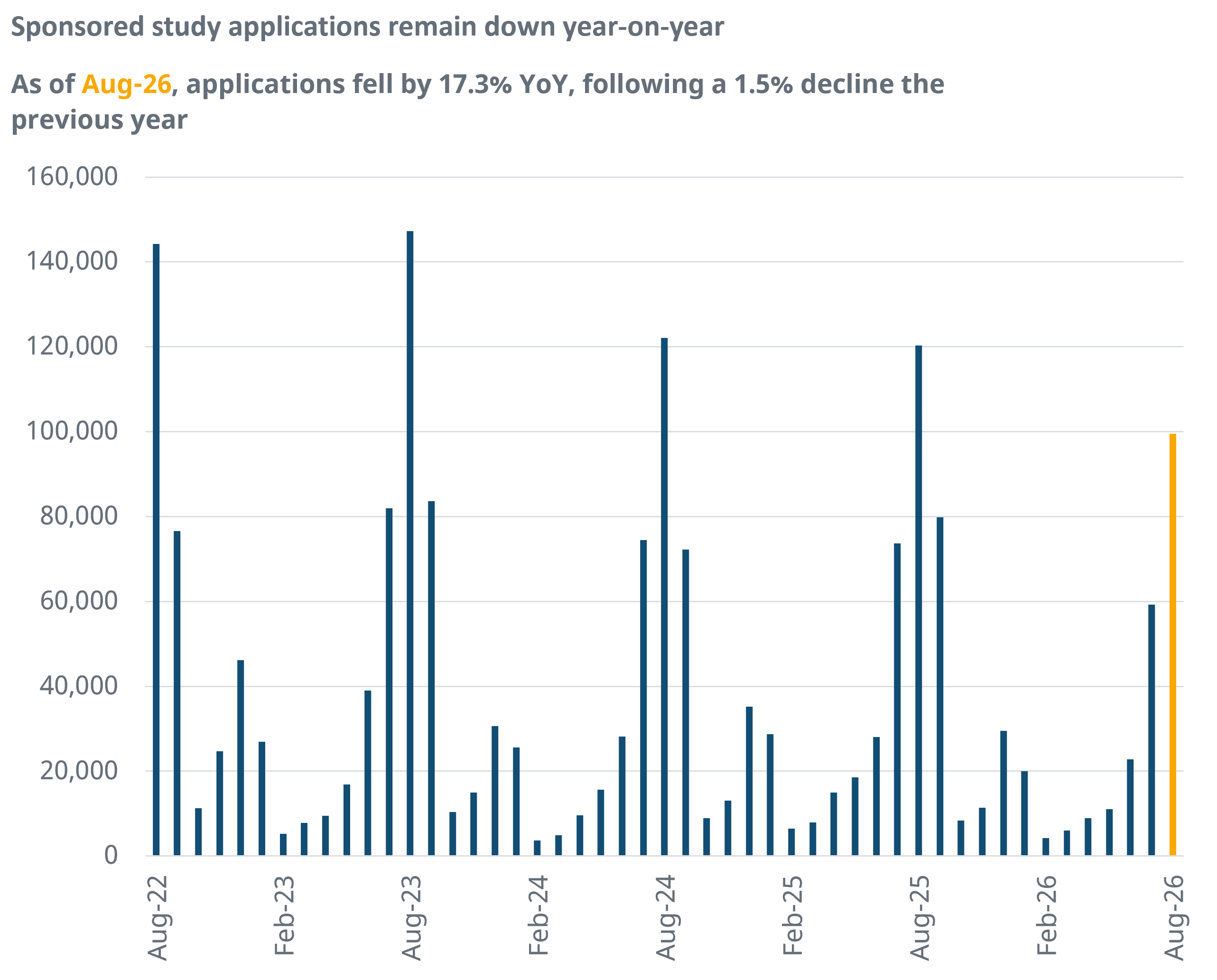
The contrast with rising non-EU undergraduate acceptances suggests that weaker postgraduate demand may be contributing to the decline. However, the monthly visa application figures cover all study levels and cannot establish how much of the reduction relates to postgraduates. Applications also measure intentions to study in the UK, rather than confirmed enrolments.
Earlier visa grants provide a clearer illustration of the differing trends by study level. In Q3 2025, grants to Chinese students for master’s and doctoral degrees fell by approximately 8,700 year-on-year, following a reduction of almost 1,500 in the same quarter of 2024.
Despite grants for bachelor’s degrees increasing by 567, total student visa grants to Chinese nationals fell by approximately 9,500 in Q3 2025. The postgraduate decline therefore accounted for most of the overall reduction.
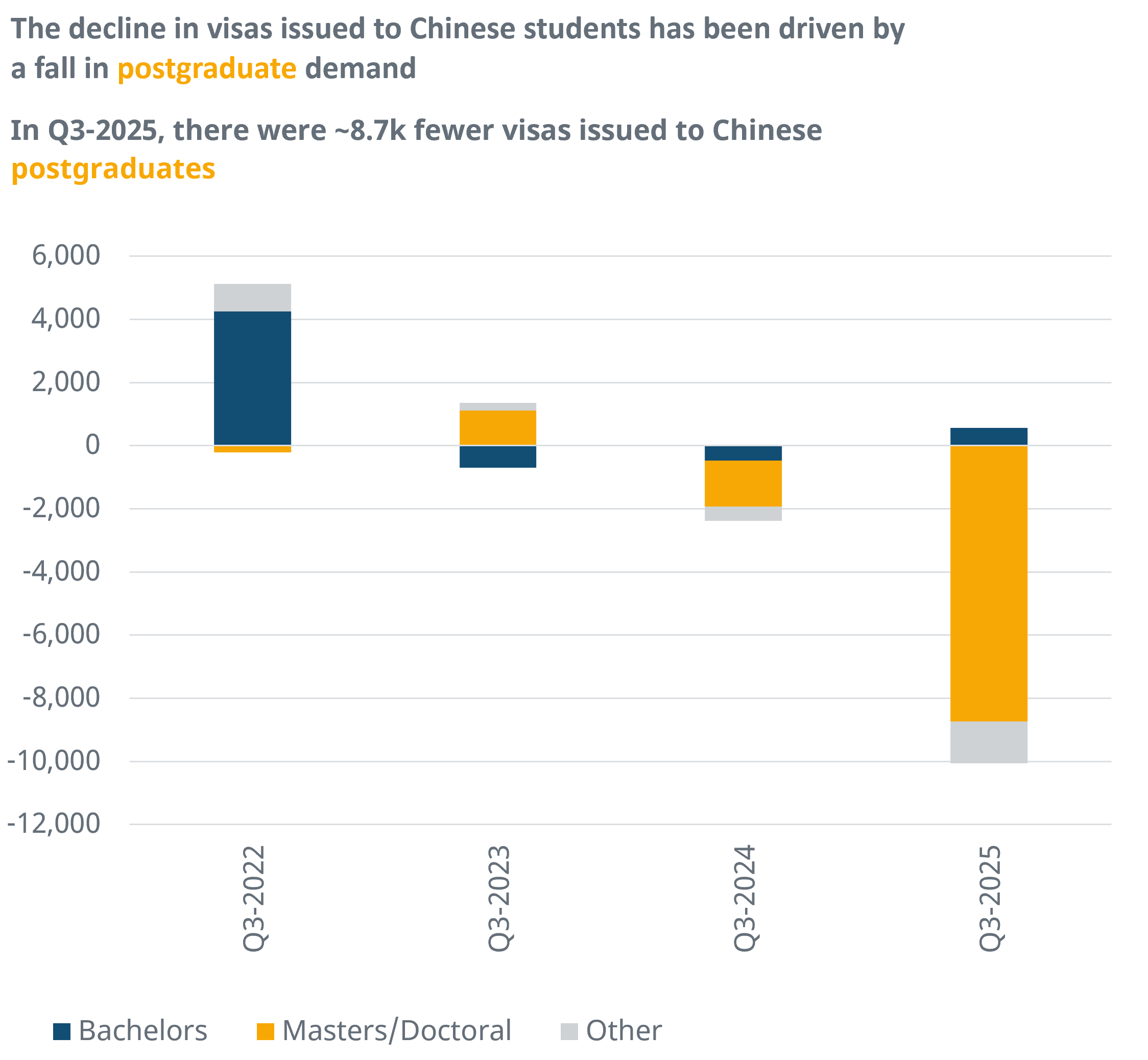
These figures relate to the previous intake, rather than the current recruitment cycle. Nevertheless, they demonstrate how growth in international undergraduate recruitment can coexist with a substantial fall in postgraduate arrivals.
Impact on PBSA demand
For accommodation providers, these trends highlight why rising undergraduate acceptances do not necessarily translate into stronger PBSA demand. An increasing intention to live at home limits the proportion likely to require accommodation, while weaker international recruitment could offset some of the growth elsewhere.
The implications will vary by location, university and scheme. Higher-priced assets with greater exposure to international postgraduates may be more vulnerable to a decline in this demographic. Where recruitment weakens, competition for a smaller pool of prospective tenants could put pressure on occupancy, increase the use of incentives and constrain rental growth.
Mid-market accommodation serving a broader mix of domestic and international undergraduates may be better placed to benefit from rising acceptances. However, the increasing proportion of students intending to live at home means that domestic growth cannot be assumed to translate directly into additional demand for these beds.
Price alone will not determine performance. A higher-priced scheme in a supply-constrained location, serving universities with resilient recruitment, may outperform a more affordable asset in a market facing weaker demand or substantial new development. Understanding each scheme’s customer base and local competitive position is therefore essential.
For operators and investors, the key question is how changes in student recruitment translate into demand for accommodation within individual markets. Assessing that demand alongside local supply, booking performance and students’ budgets will provide a more useful guide to PBSA performance than headline acceptance growth alone.
Share

Article by
Research Analyst at StuRents
Calum Martin is a research analyst in StuRents’ research division, StuRents Intelligence.
